
We all have our fears: spiders, snakes, clowns, enclosed spaces; but, some have a much bigger fear, the fear of living life freely.
NFL Player Protests and Black Lives Matter chants, have sparked a nation wide debate on the topic of racism– is it an individual problem, or is it a problem forced by an institution?
To further examine this topic, I first examined the article written by Michelle Samuels, and published by Boston University School of Medicine in February 2018. This article summarizes the deaths of unarmed black victims at the hands of the police. Studies have stated that with a greater degree of structural racism, particularly in residential segregation, have higher racial disparities in fatal police shootings of unarmed victims. To further investigate this, they created an index of structural racism.
According to the index, there was a 24 percent increase in the ratio of police shootings of unarmed victims. In addition, for every 10 point increase, there was a 67 percent increase in the states ratio of police shootings of unarmed black victims to unarmed white victims.
FBI Homicide Report findings on Police Brutality:
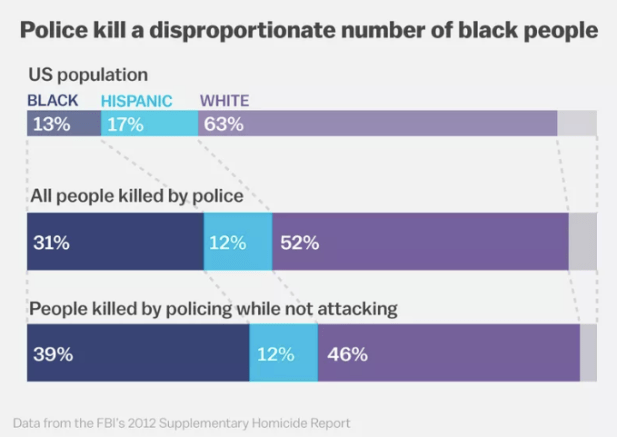
“The problem of police killings of unarmed black victims should not be viewed merely as a problem of flawed action on the part of individual police officers, but more as a consequence of the broader problem of structural racism,” said senior author Michael Siegel, professor of community health sciences at BUSPH. “Unjustified homicide by police should be added to the long list of the public health consequences of societal racism.” This here highlights how society should not label police brutality as an individual problem, caused by an individual person, but as a problem enforced by an institution. 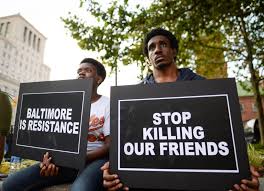
Over the summer, I enrolled in a political activism class at Georgetown University. There, I met people from all over the US that have different perspectives on different issues. One of the issues we discussed was structural racism– if it was a prevalent issue in our society today. While I had a different opinion than others on the issue, I listened to their views and tried to understand where they were coming from. This took a great deal of effort; but in the end, it helped further my understanding of the topic.
The main purpose of the race index was to spark a conversation about institutional racism. I think the study achieved its purpose, in getting people of all ages to discuss key topics going on in the world. I hope that more people will open their eyes to the evil going on in the world, because the first step to fight the evil is to talk about it.
 The Legal Mind