
The rule of law cannot exist without a proper justice system. What does the law even mean when a nation has no way to enforce it? India’s justice system is not just inefficient, it is corrupt.
To further examine India’s criminal justice system, I read the article, “India’s Criminal Justice System: An example of Justice Delayed and Justice Denied” by Vrinda Bhandari, a columnist for the Firstpost. This article is about the inner workings of India’s justice system and how that creates problems for the problem domestically.
Bhandari states how apathy and ineffective governance have created barriers in accessing justice. This has resulted in granting certain sections of society only limited access to the full range of socio-economic and civil-political rights available. There are numerous reasons on why this has been going on and the factors that influence this corrupt system.
The first are “external factors.” These factors can include: caste status, geographical barriers, and socioeconomic status. These “barriers” exclude certain sections of society by preventing their access to courts— they act as literal barriers, blockading justice. Bhandari explains that geographical barriers or distances from courts can cause great difficulty to litigants, accused, witnesses, if they have to undertake day long trips to reach the courts, only for the matter to be adjourned.
Second, are”internal factors.” These factors include delays or convoluted procedures and technicalities. These internal factors affect everyone in the system, however it impacts the people with limited resources the most.
Third, there are “quality factors.” This factor is directly correlated with the injustice rulings of the law itself. Many of the rulings are biased, and has to do with how much money a person has or the qualities that person possess—- not the logistics of the crime itself. This tends to have a disproportionate impact on the poor, whether in cases related to bail, or the death penalty.
Globally, there are nearly 3 million pre-trial/remand prisoners or “under trial prisoners”, constituting 27 percent of the total prison population (Prison Studies). However, in India the numbers are very much worse. 2 out of every 3 prisoners in jail are under trial and their court date is always delayed. This means that 2 out of every 3 prisoners who have been charged with a crime, are still “innocent.”
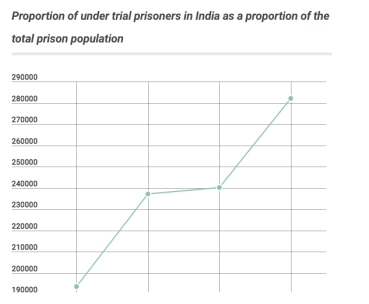
It’s clear after reading “Why It Makes Sense to Raise the Age of Juvenile Courts?” and “India’s Criminal Justice System: An example of Justice Delayed and Justice Denied” that there are many problems going wrong in the criminal justice system globally. It is essential that there needs to be change made into both the US and India’s criminal system. In both systems, innocent citizens are being locked up and stripped away from their humanity. In “Why It Makes Sense to Raise the Age of Juvenile Courts?”, the author, R.W, wanted to highlight key values such as, sympathy and justice. In “India’s Criminal Justice System: An example of Justice Delayed and Justice Denied,” the author, Vrinda Bhandari, wanted to highlight those very same values. She wanted to convey the message that change needs to be made. This comparison of both articles, made me realize how corrupt our world really is. It is like the media puts a “veil” behind all of the madness in not just domestically, but globally as well.
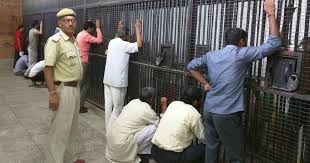
I am a second-generation immigrant. My parents moved from India 25 years ago to start a better life not just for them, but for me as well. The sad part is, our justice system is not that different from India’s— the system they wanted to get away from. I visit India yearly, and my family and I always make it a habit to visit some of these corrupt places ourselves. We do this so we can see the atrocities first hand with our own eyes. I have witnessed beatings of prisoners, briberies of cops, and innocent convicts up close.
How can we change a corrupt system?
Does our government just not care about other countries?
I honestly don’t know the answer, but what I do know is that us as informed citizens NEED to start talking about these issues. Like how I said in previous entries, I hope that more people will open their eyes to the evil going on in the world, because the first step to fight the evil is to talk about it.
 The Legal Mind